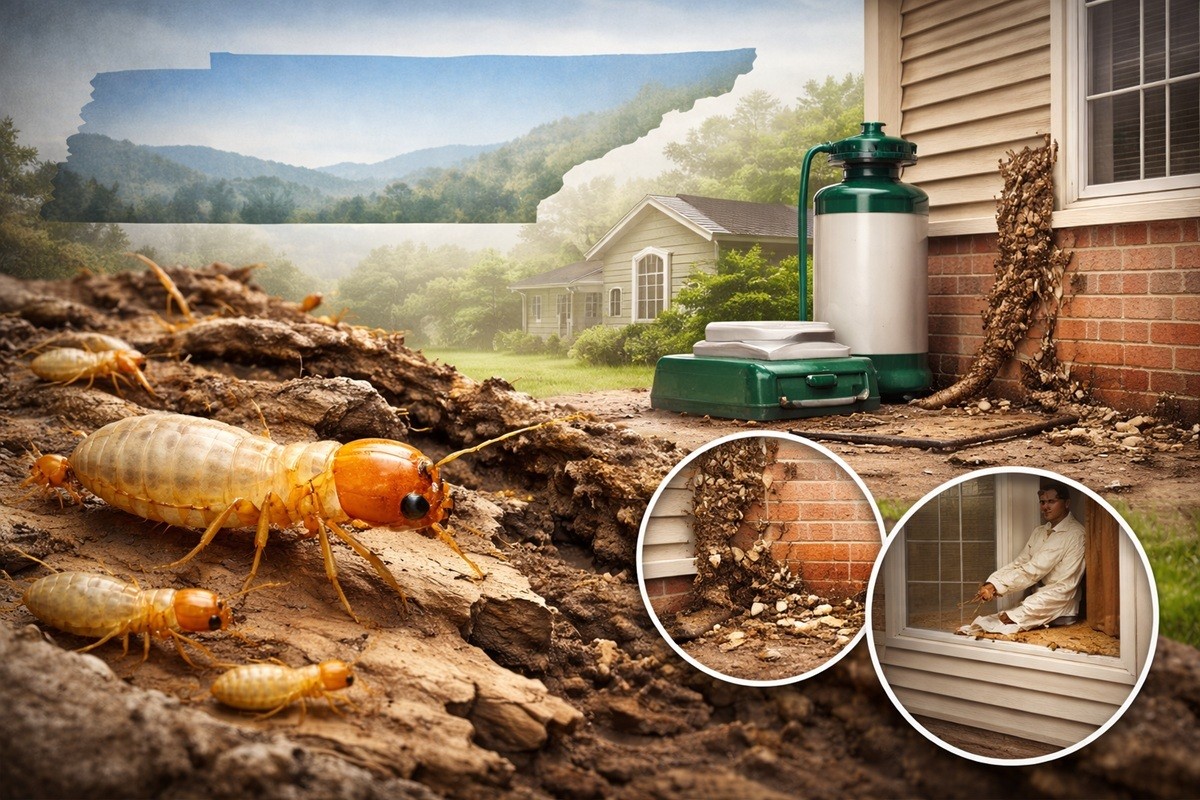
Learn how to identify termites, what causes infestations in TN homes, and which termite treatment options work.

Introduction
Termites cause more structural damage to American homes than fires, floods, and storms combined. Moreover, Johnson City's warm, humid climate makes it prime territory for these wood-destroying pests. Most homeowners don't realize they have a termite problem until significant damage has already occurred, which is why understanding the warning signs is critical.
This guide covers everything Johnson City homeowners need to know how to identify termite activity, what conditions attract them to your property, and which termite treatment options deliver lasting results. Whether you've spotted swarmer, found mud tubes, or just want to protect your investment, you'll find practical answers here.
What Termites Are Most Common in Tennessee (And Why It Matters)
Not all termites behave the same way, and effective termite control starts with understanding what you're dealing with. In Northeast Tennessee and Southwest Virginia, one species dominates.
Subterranean Termites: The Primary Threat in Our Region
Subterranean termites are by far the most common and destructive termite species in Johnson City and throughout East Tennessee. They live in underground colonies that can contain hundreds of thousands of individuals, and they build mud tubes to travel between their soil nests and the wood they're feeding on.

Why does this matter for treatment? Because subterranean termites need constant contact with soil moisture to survive. Effective termite treatment targets this vulnerability either by creating a chemical barrier in the soil or by using bait systems that workers carry back to the colony.
What Johnson City Homeowners Usually Notice First
Most people don't discover termites by seeing actual insects. Instead, they notice one of three things: swarmers (winged termites) appearing inside the home, mud tubes on foundation walls, or wood damage that's already occurred. Each of these signs tells you something different about the infestation's stage and severity.
Signs of Termites: What to Look For
Early detection can save Johnson City homeowners thousands of dollars in repair costs. Here are the most common warning signs that indicate termite activity:
Mud tubes: Pencil-width tunnels on foundation walls, piers, or floor joists
Discarded wings: Small, translucent wings near windows, doors, or light fixtures
Blistered or bubbling paint: Often mistaken for water damage
Hollow-sounding wood: Tap baseboards, door frames, or window sills—damaged wood sounds hollow
Sagging floors or doors that stick: Structural damage from long-term feeding
Where to Check First: A 5-Minute Walkthrough
You don't need professional equipment to do a basic termite check. Focus on these high-risk areas:
Crawlspace: Look at floor joists, sill plates, and piers for mud tubes or damaged wood
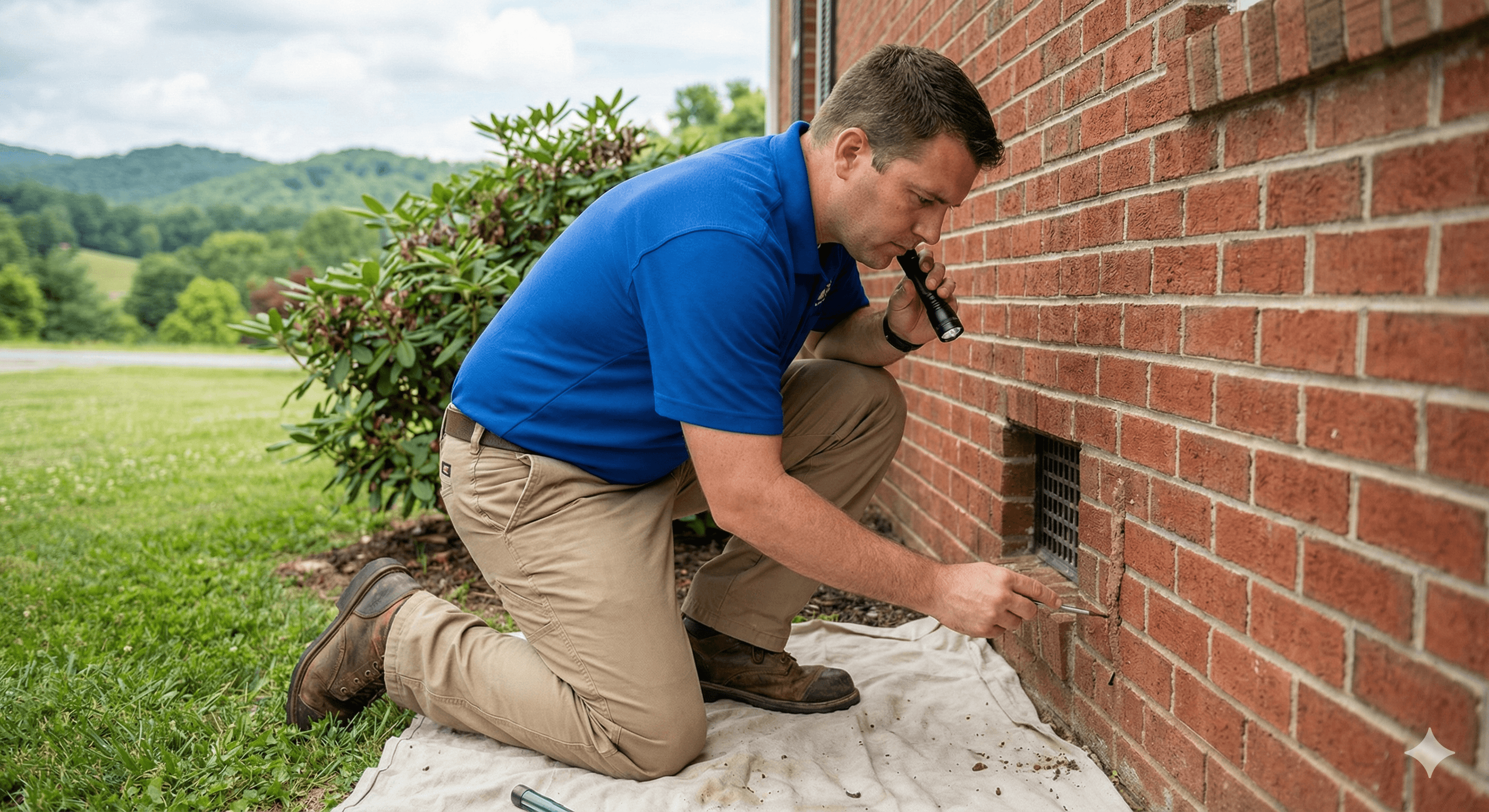
Foundation perimeter: Walk around the outside and inspect where the foundation meets the soil
Window sills and door frames: Tap and listen for hollow sounds, check for blistering
Baseboards near moisture sources: Bathrooms, kitchens, and laundry areas are higher risk
Garage and porch connections: Where wood meets concrete or soil
If you find anything suspicious, schedule a professional termite inspection to confirm activity and assess the extent of any damage.
Common Causes of Termite Infestations in Johnson City
Termites don't appear randomly. Certain conditions around your Johnson City home create the moisture and access points that attract them. Understanding these risk factors helps you make smarter prevention choices and explains why some homes get hit while neighbors don't.
Moisture and Drainage Issues
Subterranean termites need moisture to survive. Homes with drainage problems, leaky pipes, or poor grading are significantly more attractive to termites. Common culprits include clogged gutters that overflow near the foundation, downspouts that dump water too close to the house, and landscape beds that trap moisture against siding.
Wood-to-Soil Contact
When wood touches soil, termites don't need to build mud tubes because they have direct, hidden access. This includes deck posts set directly in the ground, siding that extends below the soil line, wooden porch steps resting on dirt, and fence posts connected to the house. These contact points are like open doors for termites.
Mulch and Landscaping Habits
Mulch itself doesn't cause termite infestations, but improper placement does. When mulch is piled high against siding or covers the foundation line, it creates a moist, hidden pathway. Keep mulch at least 6 inches below siding and 2-3 inches away from the foundation. Consider using rock or rubber mulch in high-risk areas.
Crawlspace Conditions
Many Johnson City homes have crawlspaces, and these enclosed areas can become termite magnets if not properly maintained. High humidity, poor ventilation, missing or damaged vapor barriers, and standing water all increase risk. A damp crawlspace with exposed wood is essentially an invitation for termites.
Stored Wood and Cardboard Near the Home
Firewood stacked against the house, lumber stored under a deck, or cardboard boxes in the garage can attract termites and give them a staging area near your home. Store firewood at least 20 feet from the house and elevated off the ground. Clear debris and unnecessary wood materials from around the foundation.
Crawlspace Conditions
In the Tri-Cities area, crawlspaces are one of the most common entry points for termites. High humidity, poor ventilation, missing or damaged vapor barriers, and debris left from construction all create favorable conditions.
Red flags: Visible condensation on pipes or joists, musty odors, standing water, wood scraps or cardboard left behind, and vapor barriers that are torn or bunched up.
Stored Wood and Cardboard Near the Home
Firewood stacked against the house, lumber stored in the garage, and cardboard boxes in the crawlspace all attract termites and provide bridges to the structure. Once a colony establishes in stored materials, moving to your home's framing is a short trip.
Best practice: Store firewood at least 20 feet from the house and elevated off the ground. Remove cardboard and wood debris from crawlspaces and garages.
Termite Treatment Options: What Works and How to Choose
Effective termite treatment in Tennessee depends on several factors: your home's construction type (slab vs. crawlspace vs. basement), the severity of the infestation, accessibility for treatment, and your long-term prevention goals. Here's what you should know about each approach.
Liquid Termite Treatments (Soil Barrier / Trenching)
What it is: A liquid termiticide is applied to the soil around and beneath your home's foundation, creating a continuous chemical barrier. Termites that pass through the treated zone are eliminated.
When it's typically used: Liquid treatments are often recommended when active infestations are confirmed, when fast knockdown is needed, or when the home's construction allows for complete perimeter treatment.
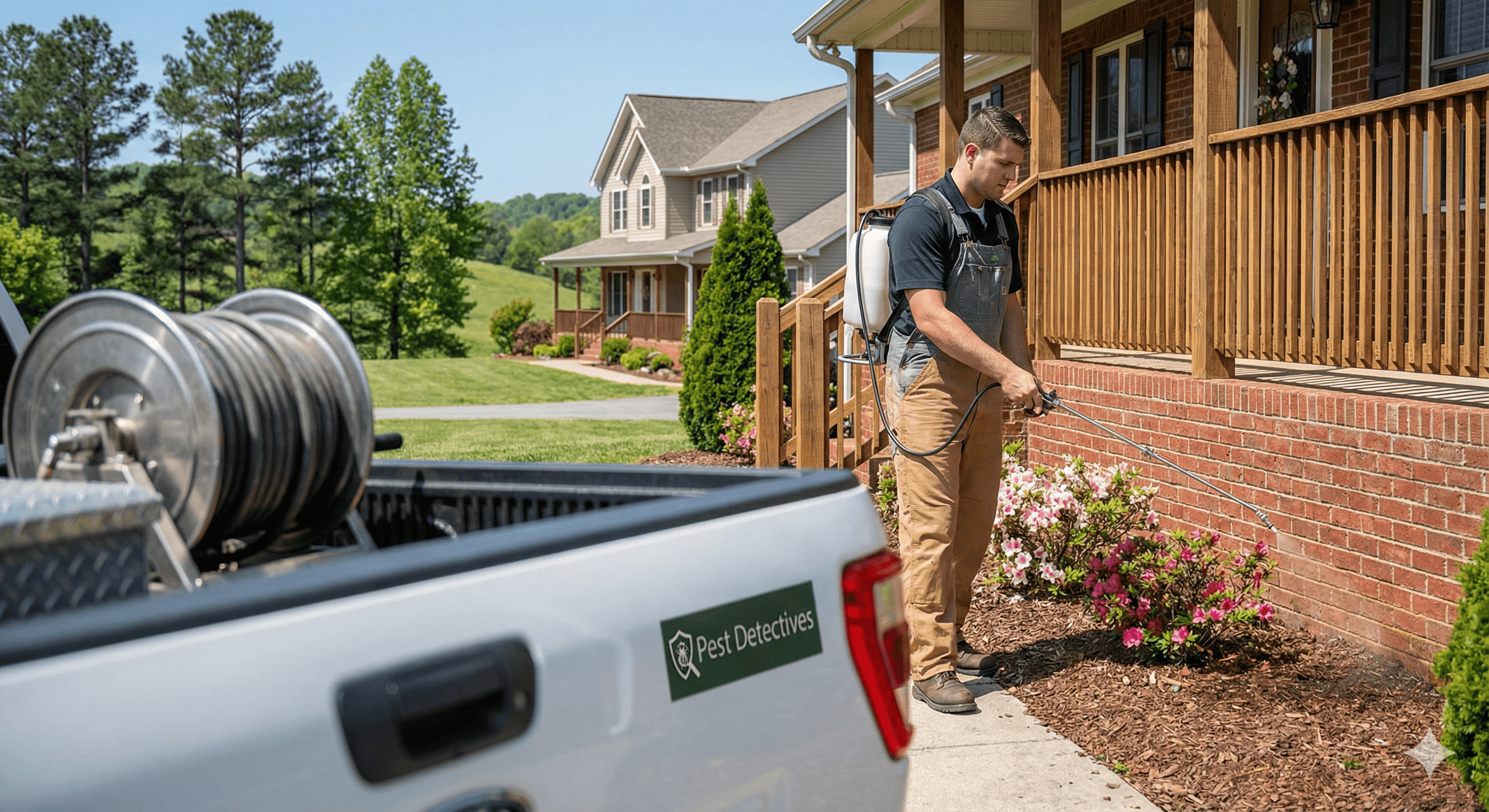
What to expect: Treatment involves trenching around the foundation and sometimes drilling through concrete (patios, garage floors, porches) to reach soil beneath. The process typically takes one day for most Johnson City homes.
Termite Bait Stations (Monitoring + Colony Elimination)
What it is: Bait stations are installed in the soil around your home's perimeter. They contain cellulose material that termites feed on. When termites find a station, bait is added that workers carry back to the colony, eventually eliminating it.
Pros: Less invasive installation, targets the colony directly, provides ongoing monitoring, environmentally lower-impact.
Cons: Slower to eliminate active infestations than liquid treatment, requires regular monitoring visits, depends on termites finding the stations.
Monitoring expectations: Bait stations are checked on a regular schedule (typically quarterly) to monitor for activity and replace bait as needed. This ongoing service is part of long-term termite prevention.
When a Combination Approach Makes Sense
For some Johnson City properties, combining liquid treatment with bait stations provides the best protection. This approach makes sense for high-risk properties (older homes, previous infestations, heavy termite pressure in the area), homes with difficult access points that can't be fully treated with liquid alone, and homeowners who want both immediate knockdown and long-term colony monitoring.
What Professional Termite Treatment Should Include
Not all termite treatment services are equal. Here's what to expect from a thorough, professional approach:
Detailed inspection with documentation: A written report identifying where activity was found, what conditions contributed to the problem, and the extent of any damage
Customized treatment plan: Recommendations based on your specific situation—not a one-size-fits-all approach
Clear explanation of methods and products: You should understand what's being applied, where, and why
Follow-up schedule: A plan for monitoring results and addressing any ongoing concerns
Prevention recommendations: Guidance on correcting conditions that contributed to the infestation
How Long Termite Treatment Takes: Timeline and What to Expect
Understanding the timeline helps Johnson City homeowners plan accordingly and set realistic expectations.
From Inspection to Treatment
A thorough termite inspection typically takes 30-60 minutes depending on your home's size and accessibility. If treatment is needed, most companies can schedule service within a few days to a week. For active infestations, faster scheduling is usually prioritized.
Treatment Day
Liquid barrier treatments for an average Johnson City home take 4-8 hours. This includes trenching, drilling where needed, applying product, and backfilling. Bait station installation is typically faster—usually 2-4 hours. You can generally remain in your home during treatment, though you'll want to keep pets and children away from work areas.
Follow-Ups and Monitoring
Follow-up matters because termite treatment isn't always instant. With liquid treatments, it can take several weeks for termites already inside the structure to contact the treated zone. With bait systems, colony elimination may take 2-6 months depending on colony size. Regular monitoring catches any continued activity and confirms the treatment is working. This isn't upselling—it's how responsible termite control actually works.
Termite Prevention Tips for Johnson City Homeowners
Whether you've just completed treatment or want to avoid needing it, these prevention steps reduce your home's attractiveness to termites:
Fix plumbing leaks promptly—including slow drips under sinks and outdoor spigots
Improve drainage so water flows away from the foundation, not toward it
Maintain a 6-inch gap between soil/mulch and any wood siding or trim
Store firewood at least 20 feet from the house and elevated off the ground
Ensure crawlspace ventilation is adequate and vapor barriers are intact
Keep gutters clean and direct downspouts away from the foundation
Remove dead stumps, buried wood, and debris near the home
Schedule annual termite inspections—even if you've never had a problem
Frequently Asked Questions About Termites
Q.1 What are the first signs of termites?
The most common early signs are mud tubes on foundation walls, discarded wings near windows or doors (especially in spring), and wood that sounds hollow when tapped. Many homeowners first notice swarmers as they are winged termites that emerge to start new colonies.
Q.2 When is termite swarm season in Johnson City?
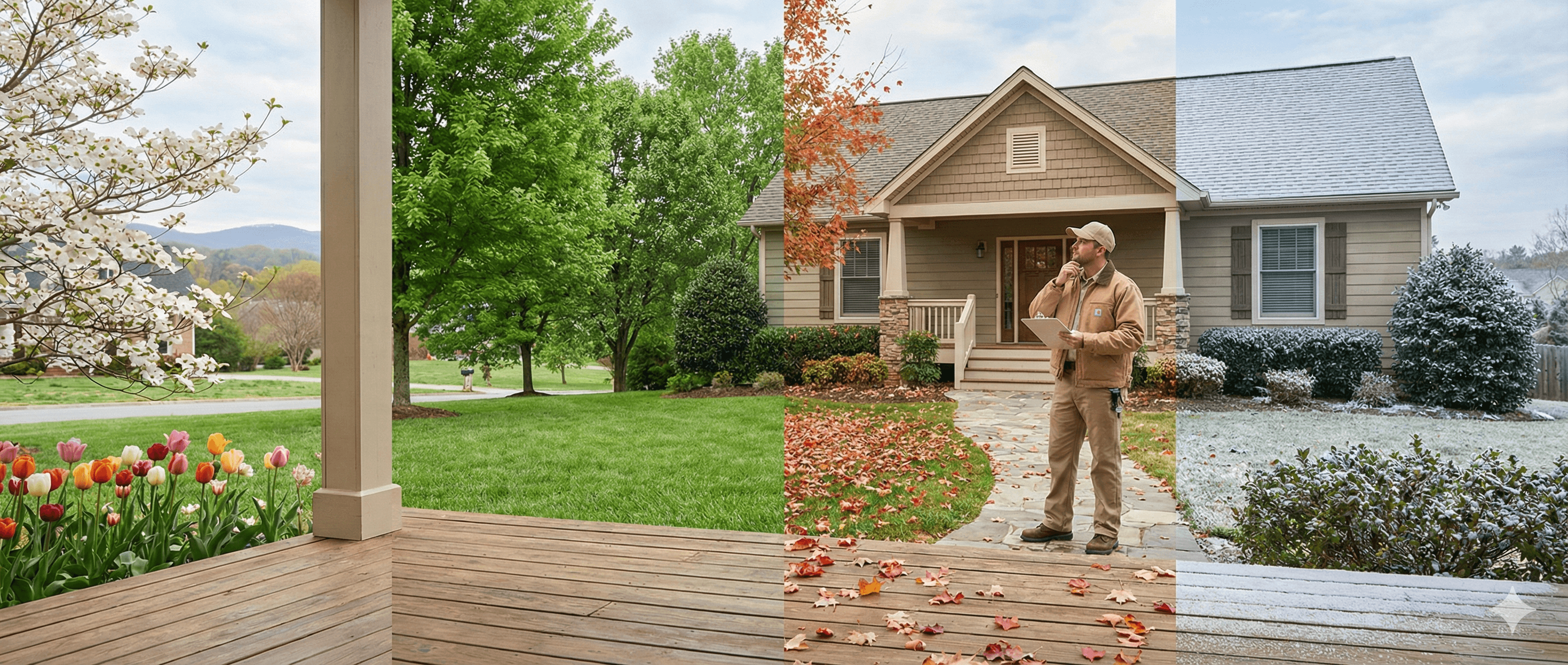
In Johnson City and East Tennessee, subterranean termite swarms typically occur from late March through May, usually on warm days following rain. If you see swarmers inside your home, it strongly suggests an established colony nearby.
Q.3 How do I know if I have termites or ants?
Termite swarmers have straight antennae, a thick waist, and wings of equal length. Carpenter ant swarmers have bent antennae, a pinched waist, and front wings longer than back wings. If you're unsure, save a sample and have a professional identify it—the treatment approach is completely different.
Q.4 What's the best termite treatment?
There's no single "best" treatment—it depends on your home's construction, the extent of activity, and your long-term goals. Liquid barriers provide fast knockdown of active infestations. Bait systems offer ongoing monitoring and colony elimination. Many situations benefit from a combination approach.
Q.5 How much does termite treatment cost in Johnson City?
Costs vary based on home size, construction type, treatment method, and infestation severity. Pest Detectives currently offers $100 off termite treatments over $500. Call (423) 534-9771 for a free inspection and estimate specific to your Johnson City home.
Q.6 Can termites come back after treatment?
Yes, especially if conducive conditions aren't corrected. Termites are always present in the soil throughout Johnson City—treatment eliminates the current threat, but new colonies can eventually find untreated pathways. That's why ongoing monitoring and addressing moisture issues matter for long-term protection.
Q.7 How often should my Johnson City home be inspected for termites?
Annual inspections are recommended for all homes in Johnson City, regardless of age or previous treatment history. Homes with crawlspaces, previous infestations, or moisture issues may benefit from more frequent monitoring.
Why Johnson City Homeowners Trust Pest Detectives for Termite Control
When you're dealing with termites, you need a local team that knows Johnson City homes and responds quickly. Here's why your neighbors choose Pest Detectives:
20+ years of local experience: We understand Johnson City's soil conditions, construction styles, and termite pressure
Thorough inspections: We don't just glance around—we check crawlspaces, attics, and every accessible area
Customized treatment plans: We recommend what your home actually needs, not a one-size-fits-all approach
Satisfaction guaranteed: If pests return between treatments, we come back at no extra charge
Locally owned and operated: Our Johnson City office is at 404 S Roan St—we live and work here
250+ five-star Google reviews: See what your Johnson City neighbors say about our service
Schedule Your Johnson City Termite Inspection Today
If you've noticed mud tubes, discarded wings, or any of the warning signs discussed above, don't wait. Termite damage gets worse and more expensive—the longer it goes untreated. A professional termite inspection confirms whether you have activity and helps you choose the right treatment approach.