Follow this Tri-Cities bed bug prep checklist: laundry steps, bagging rules, clutter tips, and what not to move before your treatment appointment.

If you have a bed bug treatment scheduled, the steps you take before the technician arrives can make or break the outcome. Proper prep protects your home, reduces the chance of re-infestation, and speeds up resolution. This guide is written for homeowners, renters, and property managers in the Tri-Cities area preparing for a professional bed bug service.
Not sure what your treatment requires? Call us before you start prepping. Doing the wrong prep for your treatment type can interfere with results.
Quick Prep Summary (Read This First)
Bed bug treatment prep checklist for Tri-Cities homeowners:
Bag and seal all linens and clothing before moving them anywhere
Run laundry as directed and re-bag clean items immediately after drying
Reduce clutter and clear floor and baseboard access throughout treated rooms
Do not move items room-to-room (this spreads bugs to untreated areas)
Follow your technician's specific instructions for heat vs. non-heat prep
Before You Start: What Type of Treatment Are You Getting?
Bed bug prep is not one-size-fits-all. Heat treatments and chemical treatments have different requirements, and mixing them up reduces effectiveness.
For heat treatments, you will generally need to remove heat-sensitive items such as candles, aerosols, certain medications, and pets. Electronics may need to be unplugged. The goal is to let heat penetrate every surface without obstruction.
For chemical treatments, you typically leave more items in place. Moving things around can spread bugs into areas that will not be treated. Your technician needs access to baseboards, furniture edges, and mattress seams, but you should not strip the room bare unless instructed.
If you do not know which treatment you are receiving, call us before you do anything. Guessing wrong can mean a failed treatment and additional service visits.
What to Wash and Dry (Laundry Rules That Actually Matter)
Laundry is one of the most important prep steps and one of the most commonly done wrong. The goal is to kill bugs and eggs using heat, then prevent reinfestation by sealing clean items immediately.
Separate dirty laundry from clean items before handling anything. Do not carry loose items through the home.
For items that can handle it: run them through the dryer on high heat for at least 30 minutes first, then wash if needed. The dryer kills bugs. The wash cycle alone does not.
For delicates: wash on the hottest safe cycle, then dry on low heat for as long as possible.
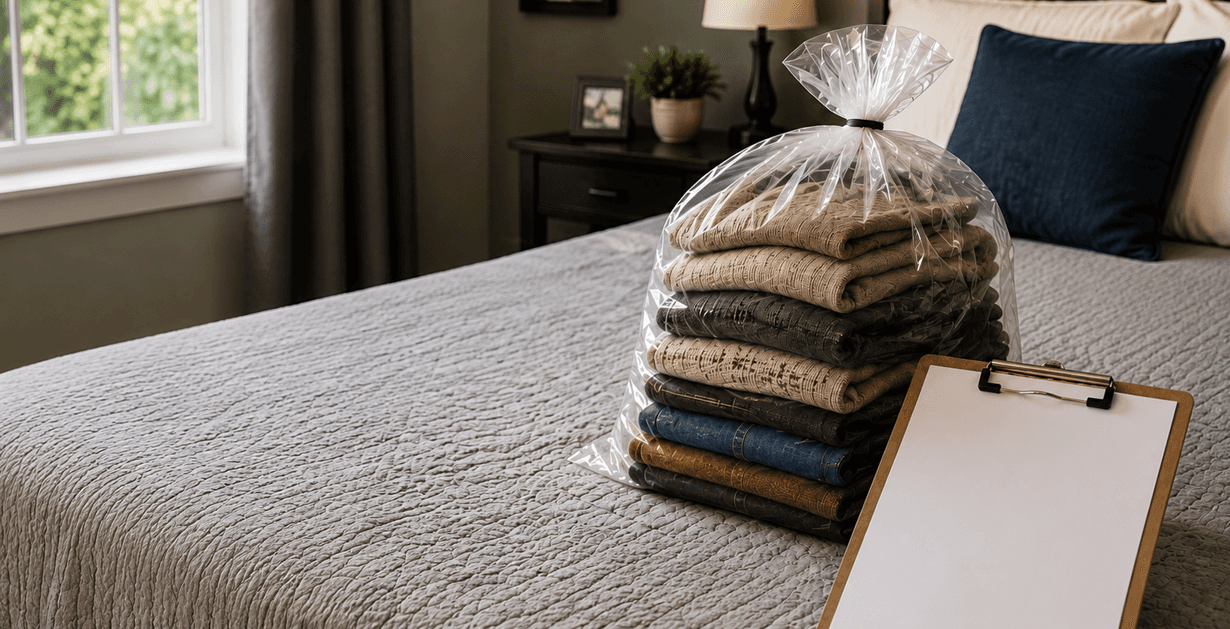
Immediately after drying, fold clean items and seal them in plastic bags. Do not set them back on the bed or floor.
Label bags clearly as CLEAN so they are not confused with untreated items.
Do not bring laundry bags to a laundromat unless your technician says it is safe. You risk spreading bugs to other people's belongings.
What to Bag and Seal
Any soft or fabric item in a treated area should be bagged before treatment unless your technician instructs otherwise.
Items to bag:
Clothing, linens, towels, and bedding
Stuffed animals and pillows
Backpacks, bags, and purses
Shoes with fabric or soft interiors
Use heavy-duty zip-lock or contractor bags and seal them completely. Label each bag as either CLEAN (already laundered) or TO TREAT (not yet processed). Store sealed bags away from infested rooms, or as directed by your technician. Do not use bagging as an opportunity to move items to other rooms.
What NOT to Move (Avoid Spreading Bed Bugs)
This is where many people accidentally make their infestation worse.
Do not move items from room to room unless your technician explicitly tells you to. Bed bugs hitchhike on fabric, furniture, and clutter. Moving things spreads them to untreated areas, which can restart the infestation after treatment is complete.
Do not carry infested items to a friend's or family member's home
Do not put infested furniture or bedding in your car unless your technician says it is safe
Do not move mattresses or box springs to other rooms for safekeeping
Do not throw items in a communal dumpster without bagging them and marking them as infested
When in doubt, leave it where it is. Let your technician advise you on what needs to move.
Reduce Clutter Without Creating a Bigger Problem
Your technician needs clear access to baseboards, floor edges, and furniture. Clutter blocks treatment and gives bugs places to hide and survive.
Clear items off the floor in all treated rooms, especially along walls and baseboards
Pick up loose clothing, books, and boxes sitting on the floor
Pull furniture a few inches from walls if instructed
Keep cleared items in the same room unless told otherwise
You do not need to empty the room. The goal is access, not a full cleanout.
Beds, Furniture, and Nightstands: What We Need Access To
Beds are the primary harborage area for bed bugs. Your technician needs clear access to every surface.
Strip all bedding including sheets, pillowcases, and mattress covers and bag them immediately
Remove any items stored under the bed
Empty nightstands and dressers if your technician requests it
For heat treatments only: unplug electronics if instructed and remove heat-sensitive items like candles and aerosols
Do not lean mattresses against walls or move box springs to another room unless specifically directed.
Vacuuming and Cleaning: What Helps vs. What Is a Waste of Time
Vacuuming is a useful prep step when done correctly. It is not a substitute for professional treatment.
Vacuum along mattress seams, box spring edges, baseboards, and furniture joints
Immediately after vacuuming, remove the bag or empty the canister into a sealed plastic bag and throw it away outside
Do not leave the vacuum canister sitting in the room. Bugs can escape.
Avoid doing a deep clean on the day of treatment if it means rearranging the room or moving furniture without direction. This can scatter bugs before the technician arrives and interfere with setup.
Pets, Kids, and Sensitive Households
All occupants, including pets, need to be out of treated areas for the time your technician specifies. This window varies by treatment type.
Make arrangements for children and pets before the appointment
Cover fish tanks tightly and turn off air pumps during chemical treatment. For heat treatment, remove fish and reptiles entirely.
Remove bird cages from treated areas
Launder and bag pet bedding the same way you handle your own linens
Let your technician know about any household members with respiratory sensitivities or medical conditions before the appointment
Day-of Appointment Checklist
Ensure all access points are unlocked: doors, gates, garage, side yard
Provide parking instructions, gate codes, or building access details in advance
An adult should be present or reachable by phone at the time of arrival
Laundry should already be bagged and clutter should already be reduced before the technician arrives
Have pets, children, and sensitive household members ready to leave the premises
Your technician will walk through the space before beginning, confirm prep is complete, and let you know if anything needs to be adjusted before they start.
After Treatment: The First 48 Hours
What you do after treatment matters as much as what you did before.
Do not unpack bags or return items to the room until your technician confirms it is safe
Expect to see some bug activity in the first few days. This is normal as exposed bugs contact the treatment material.
Place bed bug interceptor traps under bed legs to monitor activity over the next two to four weeks
Do not vacuum or clean treated surfaces aggressively in the first 48 to 72 hours. This can remove residual treatment.
Call us right away if you are still seeing significant bite activity or live bugs after two weeks
Ready to get your infestation handled the right way? We serve Johnson City, Kingsport, Bristol, and the surrounding Tri-Cities area. Book your bed bug inspection or treatment today and our technicians will walk you through exactly what prep your specific treatment requires.
Frequently Asked Questions
Q.1 Do I need to wash everything before bed bug treatment?
Not everything, but all fabric items in the treated room should be laundered or heat-dried and then sealed in bags. The dryer is your most effective tool because high heat kills bugs and eggs at every life stage. Your technician will tell you which rooms and items need to be processed before they arrive.
Q.2 Should I throw away my mattress or furniture?
In most cases, no. Professional treatment can address bugs in mattresses, box springs, and furniture without requiring disposal. Throwing items away without sealing them first can spread bugs to neighbors or others. Ask your technician before discarding anything. If you do dispose of a mattress, wrap it completely and mark it as infested.
Q.3 Can I move bagged items to another room?
Only if your technician tells you to. Moving bagged items before treatment carries a risk of spreading bugs if the seal is not perfect. The safest approach is to keep everything in the same room until your tech confirms it is safe to relocate.
Q.4 What if I live in an apartment or shared building?
Apartments have unique challenges. Bed bugs can travel through walls, electrical outlets, and shared spaces. Notify your landlord or property manager as soon as possible. Adjacent units should ideally be inspected. Do not move infested items into hallways or shared laundry rooms without sealing them first. Your technician can advise on coordination with building management.
Q.5 How long do I keep items in bags after treatment?
Keep clean sealed bags stored away until your technician confirms the treatment is complete and the infestation is resolved. For chemical treatments this may mean one to three weeks of monitoring. Your technician will give you a specific timeline based on your treatment plan.
Q.6 Will bed bugs spread if I vacuum?
They can if vacuuming is done carelessly. Always vacuum along seams and edges rather than randomly across surfaces. After vacuuming, immediately seal and dispose of the bag or canister contents outside. Never leave the vacuum sitting in the treated room. Done correctly, pre-treatment vacuuming is helpful. Done wrong, it can scatter bugs.
Q.7 What should I do if I keep getting bites but do not see bugs?
Bites alone are not a reliable identification method since they look similar to mosquito or flea bites and reactions vary by person. Look for physical evidence: small rust-colored stains on sheets, shed skins along mattress seams, or tiny dark spots on fabric. If you suspect bed bugs but cannot confirm it, schedule a professional inspection. Early detection makes treatment significantly easier and less costly.