Learn which spiders in Northeast Tennessee are actually dangerous, how to tell brown recluse from common house spiders, and when to call for spider control in Johnson City.

Introduction
Spiders are one of the top reasons people call for pest control—sometimes because they’re seeing a lot of webs, sometimes because they’re afraid every spider might be a brown recluse.
The truth in Northeast Tennessee is more balanced:
Most spiders you see in your Johnson City home are nuisance-only.
A small number of species can cause problems if they’re pressed against skin or disturbed.
From our base in Chuckey, Pest Detectives handles spider problems in Johnson City, Kingsport, Bristol, and nearby communities. This guide breaks down which spiders are likely harmless, when you should be more cautious, and where the brown recluse fits into the picture.
Most Spiders in Your Home Are Just Nuisance Pests
Let’s start with the good news: the majority of spiders you see around:
Corners of ceilings
Basements and garages
Window frames and porch lights
These are “house spiders” and other web-builders that are more of an eyesore than a real threat. They’re usually after the insects that are already finding their way inside—flies, moths, gnats, and small beetles.
House spiders:
Build messy webs in corners, rafters, and around clutter
Tend to run away or drop out of sight when disturbed
Very rarely bite, and when they do it’s usually mild
They’re not fun to live with, but they’re not hunting you.
The Brown Recluse: What Makes It Different
The brown recluse gets a lot of attention, and for good reason:
Its bite can sometimes cause more serious reactions.
It prefers undisturbed areas where people store things.
It’s good at staying out of sight, which makes people nervous.
A few practical points for homeowners in Northeast Tennessee:
Brown recluse spiders tend to hide in cluttered areas, cardboard boxes, shoes, stored clothing, and behind seldom-moved furniture.
They’re called “recluse” for a reason—they don’t go looking for people. Bites are usually the result of a spider being pressed against skin in clothing, bedding, or items being handled.
If you’re seeing spiders casually wandering around ceilings in bright rooms on a regular basis, those are almost always common house spiders, not recluses.
Brown Recluse vs. Common House Spider (Plain-English Differences)
You don’t need to become an expert arachnologist, but it helps to know a few basics.
Body Shape and Markings
Brown Recluse (general traits):
Medium-sized brown spider
Legs are fairly long and thin
Body is more uniform in color (no stripes on legs)
Often described as having a darker “violin” shape on the back (close to the head area)
No obvious thick spines on the legs
Common House Spiders (general traits):
Often have striped legs or patterned abdomens
Many have more rounded bodies or noticeable patterns
Webs look messy and are built in corners, around windows, and in open areas
If you’re seeing obvious striping or bold patterns, odds are you’re looking at a house spider, not a recluse.
Webs and Behavior
Brown recluse: Not known for big, open webs in corners of the ceiling. They prefer tight, sheltered spots and don’t usually set up obvious webs in living spaces.
House spiders: Build webs exactly where you notice them most—corners, light fixtures, around windows, garage rafters, etc.
Bottom line: lots of webs in obvious places = usually house spiders, not recluses.
Where Dangerous Spiders Are More Likely to Hide
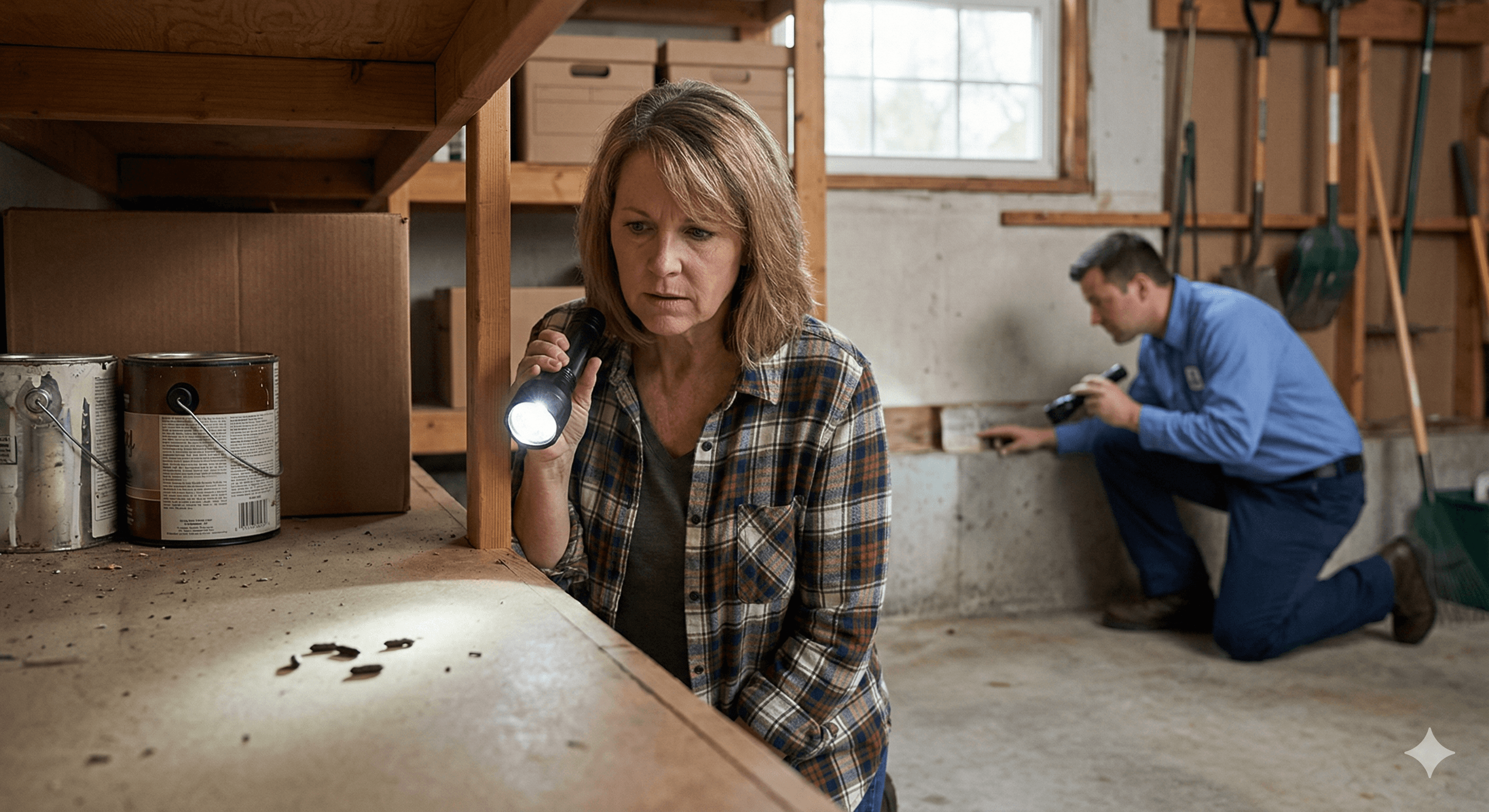
If a medically important spider is going to be in your home, it’s more likely to be in:
Boxes in the garage, basement, or attic
Piles of clothing or linens that sit undisturbed
Behind seldom-moved furniture or stored items
Sheds, outbuildings, and crawlspaces with little foot traffic
Any place that are dark, undisturbed, cluttered are more appealing to spiders that prefer to stay hidden.
For safety, it’s smart to:
Wear gloves when moving long-stored boxes or wood.
Shake out shoes, boots, and stored clothing that haven’t been worn in a while.
Avoid reaching blindly into dark gaps or piles.
These simple habits go a long way.
What About Black Widows in Northeast Tennessee?
Black widows can also be present in our region, often:
In crawlspaces
Under steps or decks
In garages and outbuildings
Around clutter, wood piles, or dark corners
Like brown recluses, they’re not running around looking for people. Most issues happen when they’re grabbed or pressed in tight spaces.
If you see a spider that looks like it might be a widow—smooth, dark body, with a distinct red mark underneath—give it space and don’t try to handle it. That’s a good time to call a professional.
When a Spider Problem Becomes More Than Just a Nuisance
Even if most individual spiders are harmless, an ongoing spider problem still matters because:
It usually means you’ve also got other insects they’re feeding on.
Webs and droppings can build up in corners and storage areas.
It adds a constant background stress for anyone in the home who’s nervous about spiders.
Signs your spider situation deserves more attention:
Webs reappear quickly after you clean
You’re seeing spiders every day, not just once in a while
Spiders are showing up in beds or heavily used living spaces
You’ve found what you believe may be a brown recluse or black widow
At that point, it’s worth treating the situation like a real pest issue, not just a housekeeping annoyance.
How Pest Detectives Handles Spider Problems in Johnson City
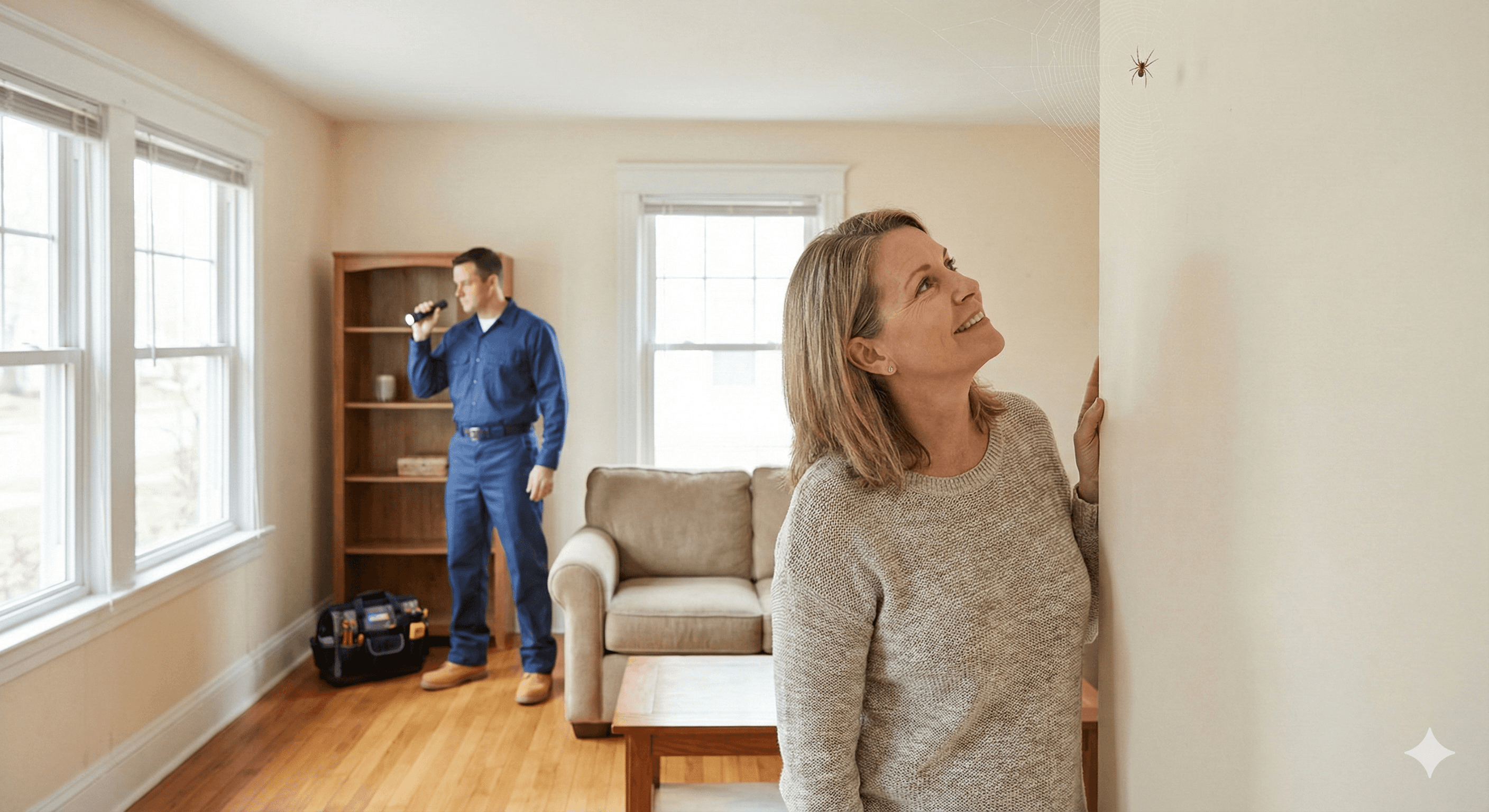
When we get called out for spider issues in Johnson City and surrounding areas, the goal isn’t just to knock down what you can see. We want to understand why spiders are so comfortable in your home and fix that.
1. Inspection and Identification
We start by asking:
Where are you seeing spiders most?
How often are they appearing?
Are there specific rooms or storage areas that bother you?
Then we inspect:
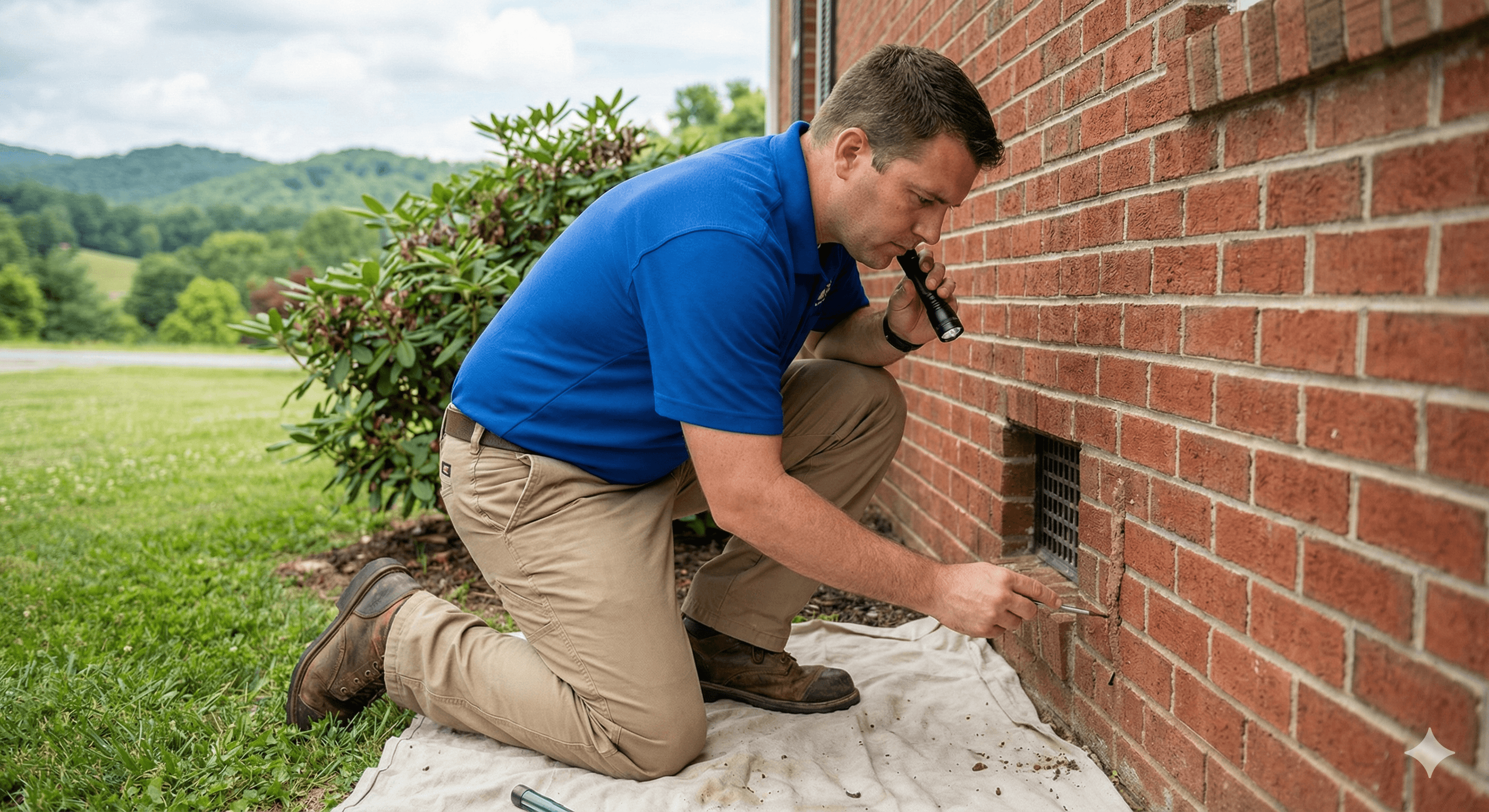
Corners of ceilings, basements, garages, and storage rooms
Exterior walls, porch lights, eaves, and around windows
Cluttered spots, boxes, or areas where you suspect a more serious species
If we find spiders that might be medically important, we treat them as a priority and recommend a plan that fits the risk.
2. Web Removal and Targeted Treatments
Next, we:
Knock down reachable webs and egg sacs in key areas
Apply treatments along baseboards, corners, and other harborage sites
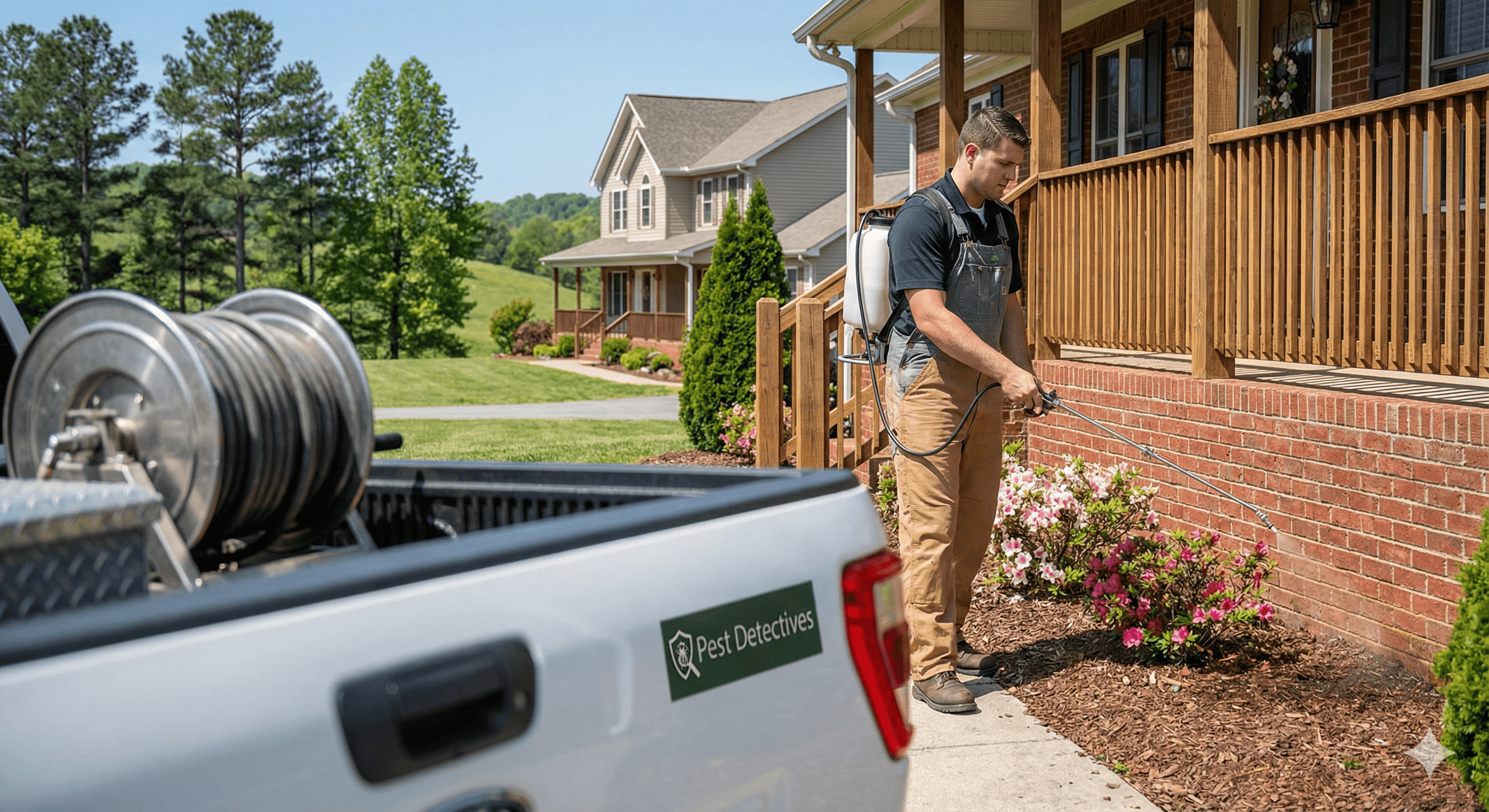
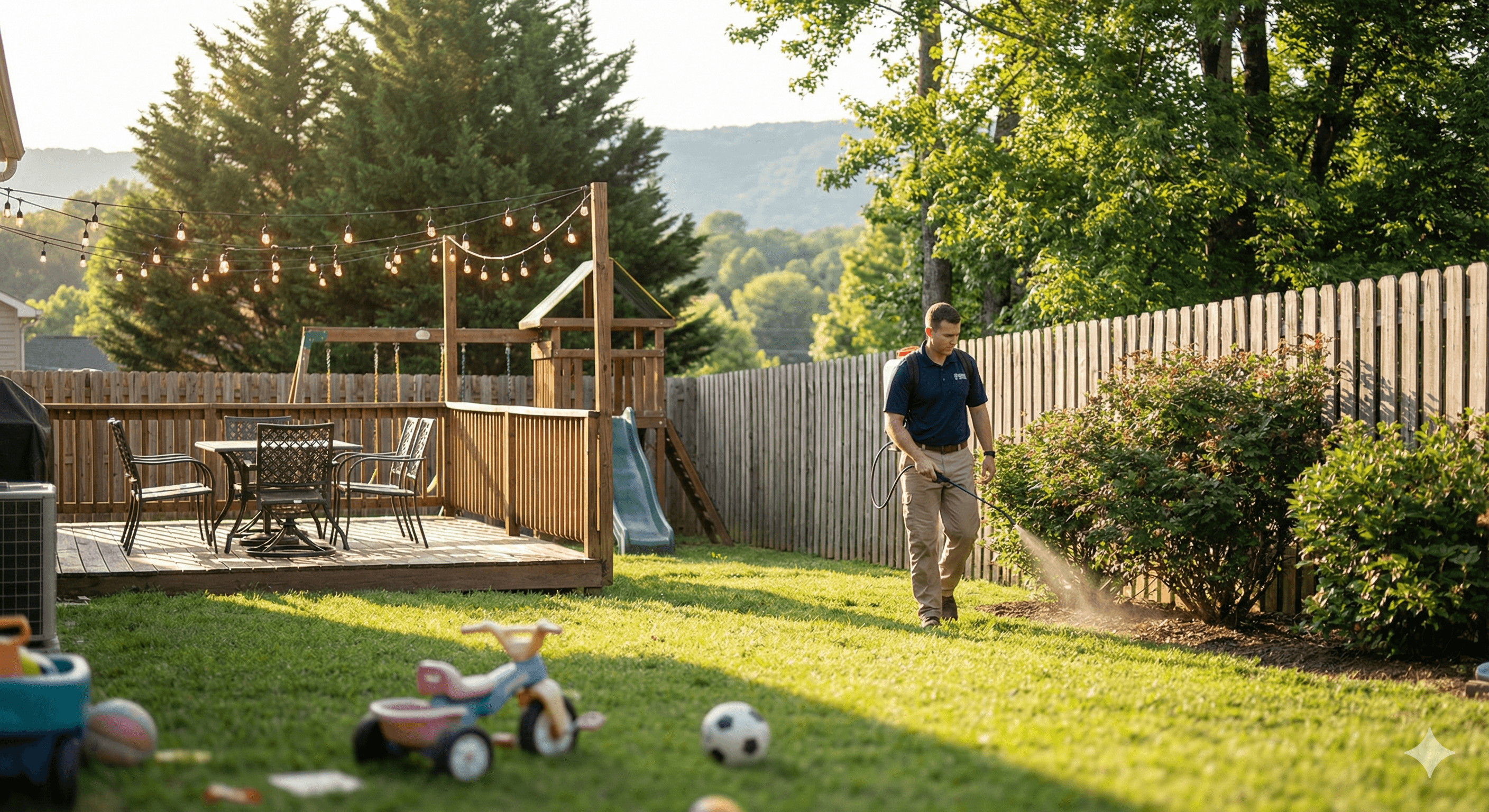
Treat exterior trouble spots—entry points, eaves, around doors and windows, and areas where other insects are active
The idea is to reduce both spiders and the insects they’re feeding on, inside and out.
3. Practical Prevention Tips
During or after service, we’ll point out:
Spots where clutter is giving spiders too many hiding places
Gaps, cracks, or moisture issues that are drawing insects in
Simple changes—like moving firewood, sealing a gap, or adjusting lights—that can lower spider pressure
You don’t have to fix everything at once. We’ll prioritize what will make the biggest difference.
What to Do If You Think You’ve Found a Brown Recluse or Widow
If you see a spider you’re genuinely concerned about:
Don’t handle it.
Avoid trying to squish it in your hand, scoop it up without protection, or chase it around.If possible, capture it safely or take a photo.
Use a clear container and a stiff piece of paper if you’re comfortable doing that. Or take a clear close-up photo without getting your face too close.Call a professional.
Share your photo or description and where you saw it (room, location). We can help assess the situation and recommend whether further inspection or treatment makes sense.
And if anyone is bitten and you’re worried about the reaction, contact a medical provider or urgent care. A doctor is the right person to evaluate symptoms; we’re there to help with what’s happening in the environment.
The Bottom Line: Most Spiders Aren’t Out to Get You.
In Northeast Tennessee, the vast majority of spiders in your home are nuisance-only, not medical emergencies. That said:
You don’t have to put up with webs everywhere.
You should take potential brown recluse or widow situations seriously.
A steady spider presence usually signals other insect issues that can be treated.
From Chuckey, Pest Detectives helps homeowners in Johnson City, Kingsport, Bristol, Jonesborough, Elizabethton, Greeneville, and surrounding communities reduce spiders and the pests they feed on with targeted spider control and exterior perimeter work.
If spiders are making your home feel less comfortable than it should, we’re here to help you get things back under control.