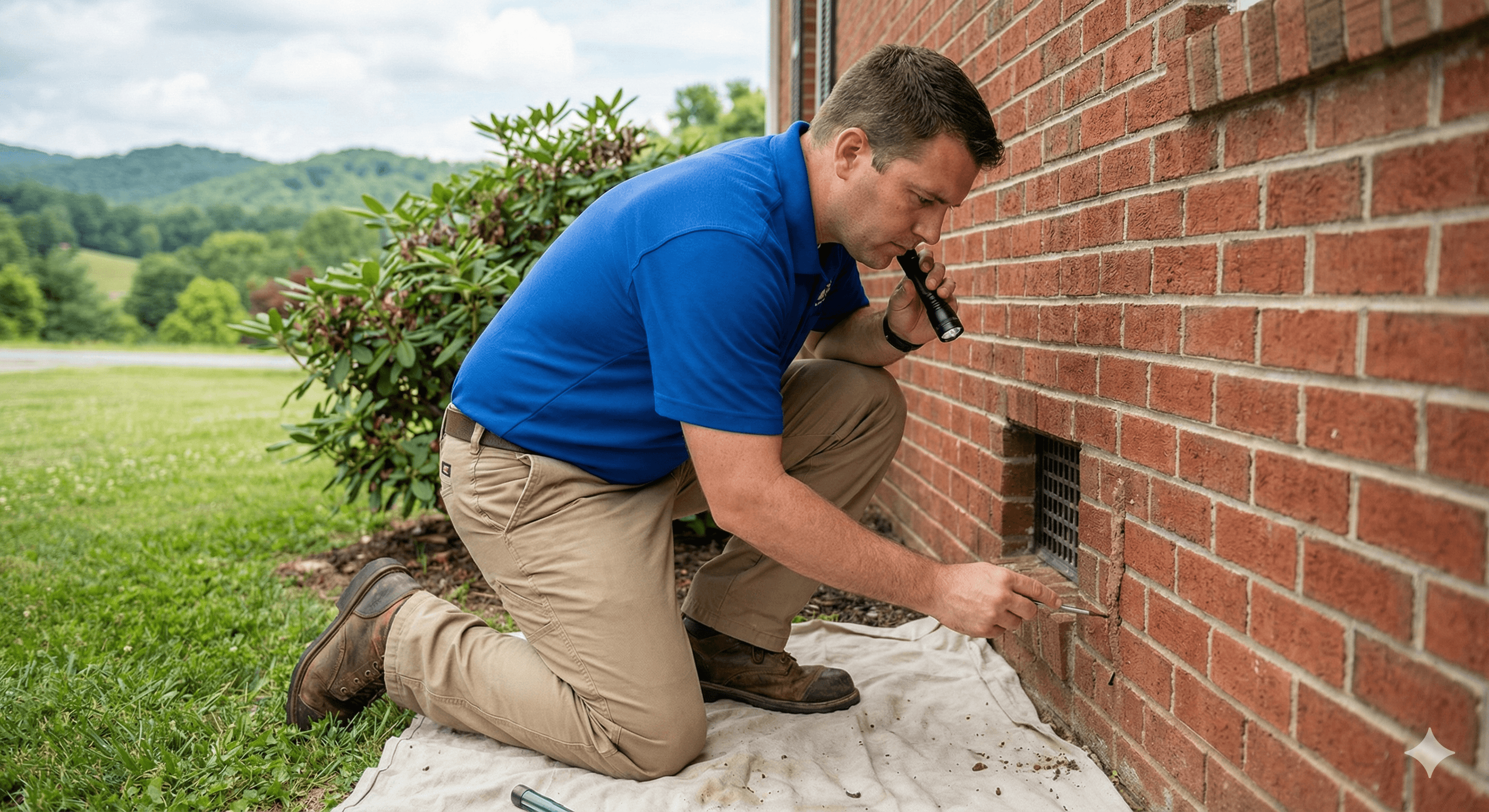
Learn when termite season hits Northeast Tennessee, how to spot termite activity in your Johnson City home, and when to call for a professional inspection.

Introduction
Termites don’t chew through your home overnight. The damage usually builds slowly, often for years, while everything looks perfectly normal on the surface. That’s why understanding termite season—and the early signs of activity—is so important for Johnson City homeowners.
From our base in Chuckey, Pest Detectives inspects and treats homes across Johnson City, Kingsport, Bristol, Greeneville, and nearby communities. Here’s what termite season looks like in Northeast Tennessee, how to tell if termites are active, and when it’s time to schedule a professional inspection.
What Termites Do We See in Northeast Tennessee?
In our area, the primary threat is the eastern subterranean termite. These termites:
Live in large colonies underground
Build mud tubes to travel between soil and wood
Feed on structural lumber, flooring, trim, and other cellulose materials
Because they stay hidden in soil, wall voids, and crawlspaces, you usually won’t see the insects themselves—you’ll see the clues they leave behind.
When Is Termite Season in Northeast Tennessee?
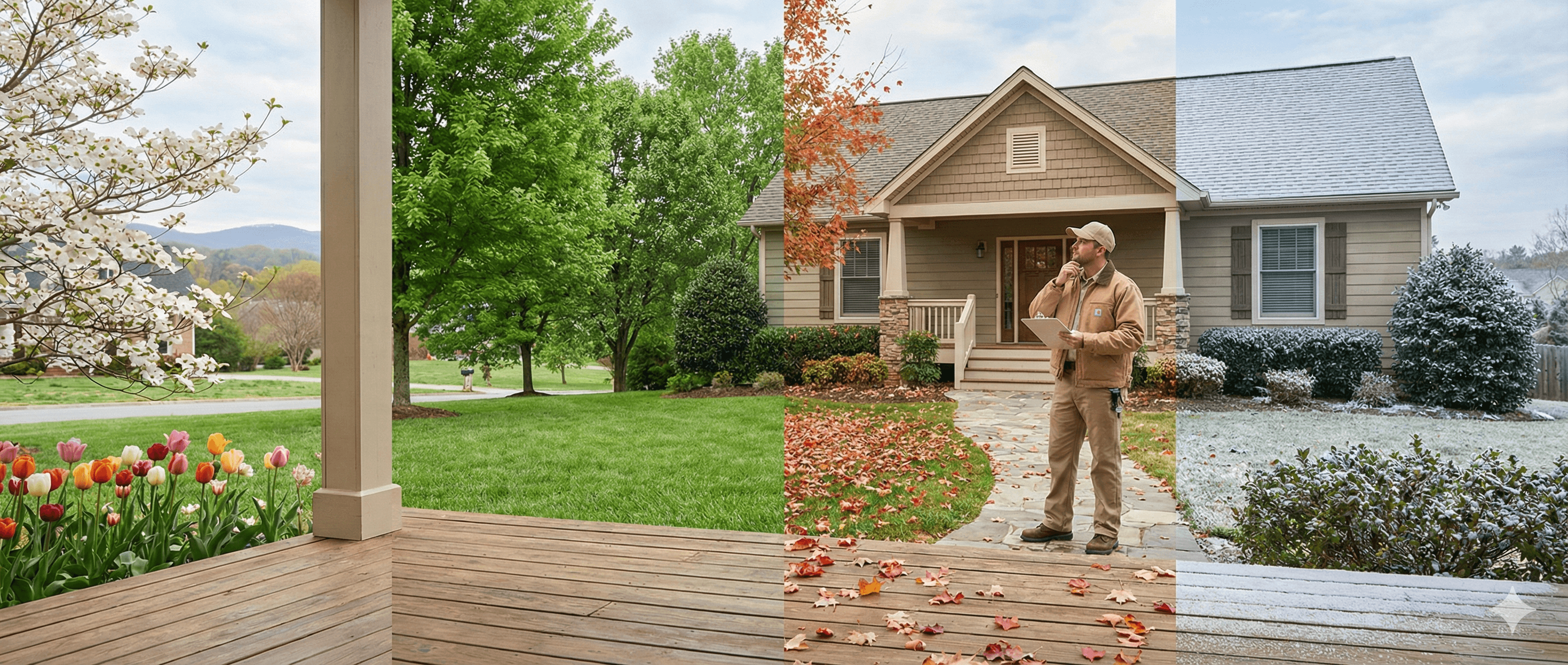
“Termite season” isn’t just a single month; it’s the period when termite activity is most visible and colonies are expanding.
For Northeast Tennessee, that typically means:
Swarm season:
Starts in late winter or early spring on the first warm, humid days
Can continue through spring and early summer as different colonies swarm at different times
Feeding season:
Essentially year-round in heated homes, especially in crawlspace and slab construction
Activity may slow slightly in very cold weather, but termites don’t simply die off
Think of termite season like this:
Spring: You’re most likely to see signs (swarmers and wings).
Rest of the year: Termites may still be quietly feeding, even if you don’t see anything obvious.
Termite Swarmers: The Most Obvious Warning Sign
The easiest way for a homeowner to discover termites is by seeing swarmers—winged reproductive termites that leave the colony to start new ones.
You might notice:
A sudden burst of small, winged insects around windows, doors, or light fixtures, especially on warm, muggy days
Discarded wings on windowsills, in spider webs, or on the floor near baseboards
A small pile of wings in a specific area after you’ve been away for a few hours
Swarmers are often mistaken for flying ants. If you see “ants with wings” indoors in early spring, it’s worth paying attention.
Termites vs. Ants (Quick ID Guide)
Termites: Straight antennae, thick waist, front and hind wings about the same size
Ants: Elbowed antennae, pinched waist, front wings longer than back wings
When in doubt, take clear photos or save a few specimens and call a pro. It’s much easier to confirm early than to wait for damage to appear.
Other Signs of Termites Johnson City Homeowners Should Watch For
Swarmers are only one clue. Because eastern subterranean termites live underground, you’re more likely to spot damage or sheltering structures than the insects themselves.
Keep an eye out for:
1. Mud Tubes
Subterranean termites build pencil-thick mud tubes to stay moist and protected while traveling between soil and wood. You’ll often see them:
On foundation walls (inside or outside)
Along crawlspace piers
Behind AC lines or plumbing penetrations
Climbing block walls toward sill plates and joists
If you break a tube and it’s still active, you may see small, cream-colored worker termites inside.
2. Wood That Sounds Hollow or Feels Soft
Termites usually eat the inside of wood first, leaving a thin outer layer. Signs include:
Baseboards, door frames, or window trim that sound hollow when tapped
Areas of flooring that feel spongy or sagging
Paint bubbling or blistering without a clear water source behind it
Don’t start ripping things apart yourself—note the locations and get them checked.
3. Unexplained “Water Damage” Without a Leak
Because termites often follow moisture, their damage can mimic water problems. Watch for:
Buckling floors or swollen trim
Stains or warping around doorways or window frames
Isolated areas where material looks “off” compared to the rest of the room
If your plumber or contractor can’t find a leak, termites might be part of the story.
4. Tiny Holes and Dust-Like Material
In some cases you may see:
Small holes in drywall or wood members
Fine, sand-like material or debris collecting below
This isn’t always termites (other insects can cause it), but it’s worth checking—especially if combined with other signs.
Common Termite Risk Areas Around Johnson City Homes
Certain conditions make a home more attractive to termites. During inspections we pay extra attention to:
Crawlspaces with high humidity or poor ventilation
Wood-to-soil contact, such as deck posts, porch steps, or untreated lumber touching the ground
Mulch beds piled high against siding
Leaky gutters or downspouts that keep soil damp near the foundation
Old tree stumps or buried construction debris close to the house
You can’t change the soil or the local climate, but you can reduce moisture and wood contact, which takes some pressure off your home.
What to Do If You Think You Have Termites
If you suspect termites—whether you’ve seen swarmers, mud tubes, or odd damage—here’s the best way to respond:
Don’t spray over the evidence.
Over-the-counter sprays can kill the termites you see but leave the colony untouched. They also make it harder for a pro to evaluate activity.Take photos and notes.
Capture clear pictures of wings, tubes, or damage and jot down where you saw them (which room, which wall).Call for a professional inspection.
Termite work is one area where DIY really doesn’t pay off. A proper inspection and treatment plan is much cheaper than repairing structural damage down the line.
What a Termite Inspection From Pest Detectives Includes
From our base in Chuckey, we provide termite inspections for Johnson City and nearby communities. A typical visit includes:
Conversation & History
We ask what you’ve seen—swarmers, wings, odd damage, or just concerns based on neighbors’ experiences.Exterior Inspection
We walk the foundation, crawlspace access, decks, and porches looking for mud tubes, conducive conditions, and potential entry points.Interior & Crawlspace Check (When Accessible)
Inside, we inspect baseboards, door frames, and any suspect areas. In crawlspaces, we look at sill plates, joists, piers, and support posts.Findings & Options
We explain what we found (active infestation, old evidence, or risk factors) in plain language. If treatment is recommended, we outline:Whether a liquid barrier, bait system, or combination approach makes the most sense
What areas we’d treat
What you can do to help reduce moisture and other inviting conditions
Termite Treatment Options: Liquid, Bait, or Both?
Homeowners often ask which method is “best.” The reality is that each house is different, and the right choice depends on construction, soil conditions, and the colony’s location.
In general:
Liquid treatments create a continuous treated zone in the soil around the foundation. Termites passing through pick up the active ingredient and share it with the colony.
Bait systems place stations around the home. Termites feed on bait and bring it back to the colony, allowing us to eliminate the colony over time.
Combination plans use both, especially in challenging soil, complex foundations, or histories of heavy pressure.
We’ll walk through the pros and cons for your specific home instead of pushing a one-size-fits-all package.
How Often Should Johnson City Homes Be Checked for Termites?
Because eastern subterranean termites are common across the region, every home should have some level of monitoring.
A reasonable rule of thumb:
Annual inspections for most homes
Closer monitoring for homes with:
Previous termite history
Older construction with crawlspaces
Persistent moisture problems around the foundation
If you already have a treatment or bait system in place, inspections are the “check-in” that makes sure everything is still doing its job.
Simple Ways to Make Your Home Less Attractive to Termites
You can’t termite-proof a house completely, but you can make it harder for them to set up shop:
Keep mulch and soil pulled a few inches away from siding.
Fix leaky gutters, downspouts, and outdoor spigots.
Avoid stacking firewood or lumber directly against the house.
Don’t ignore sagging floors or odd wall damage, especially in older homes.
If you remodel, save any suspicious wood for your inspector to review.
These small moves, combined with a professional plan, make a big difference over the life of a home.
Worried About Termites in Your Johnson City Home?
Termites aren’t a problem you can see coming a mile away. By the time damage is obvious, they may have been active for years. The key is to know when termite season hits, watch for the subtle signs, and bring in a professional team before the problem grows.
From Chuckey, Pest Detectives provides termite inspections and treatment for homeowners in Johnson City, Kingsport, Bristol, Jonesborough, Elizabethton, Greeneville, and surrounding Northeast Tennessee communities.
If you’ve seen swarmers, mud tubes, or just want a second set of eyes on your home, we’re here to help.